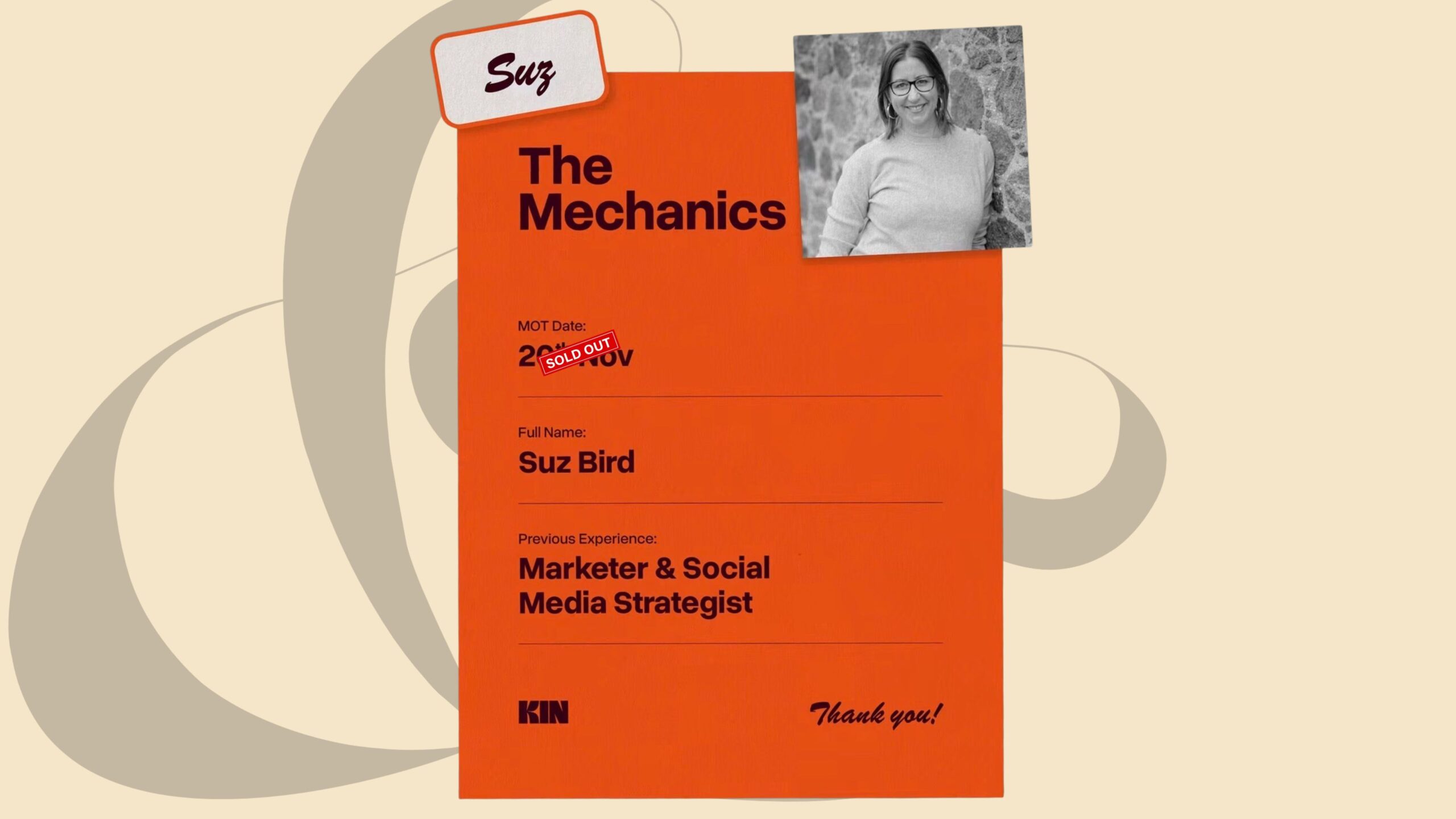
The closest I’ll ever get to being called a Mechanic is singing (badly) to Mike & the Mechanics, but marketing I do know and it was a pleasure to be part of the Kin Creative MOT team and deliver some online mentoring sessions to emerging and / or established creatives in the marketing and communications industry.
Kin is a registered charity and champions emerging creatives, supporting them to build lasting creative futures in Aberdeen City and Shire, and beyond. The Creative MOT sessions are a series of 1-to-1 conversations with working creatives who all have a connection to the North East . The sessions were open for any emerging creative (student, graduate, career-pivoter or advanced career-change-maker) to book a 20 minute slot and basically ask-me-anything.
I’ve heard there is some good feedback, but honestly it was just pretty cool to put aside some time and talk about the marketing and communication industry to graduates, up-and-coming graduates, early entry employees and creatives forging new paths in the market. And yes, “it depends“, “why” and “two things can be true at the same time” are still some of my most used phrased in my marketing vocabulary – something to do with being a creative, behaviour psychology and working with people right…?
The questions were varied, but my suggestions and feedback fell into some clear categories around the creative, marketing and communications industry; including thoughts on AI, job hunting, creativity in the business world, social media for business and networking – I made notes on these here as some of the conversations might be helpful for others.
Creative projects and social media.
Creative ideas don’t all need to become businesses. Separate projects you make purely for enjoyment from those you want to grow commercially – and focus on one or two at a time so you can give them a fair go. For creative projects on social media, don’t wait for everything to be perfectly planned or polished: share short, honest moments, stories and observations while they still feel fresh. Choose a platform that feels natural to you, keep your content-making process simple and let the conversations you have in DMs or comments work as a guide for you. And don’t forget to make the account feel human – people connect not only with the work but with the person and perspective behind it.
Early career stage: building your network.
Build your portfolio by treating yourself as a client – use LinkedIn and Instagram to show the kind of content and campaigns you could create and make your profile easy for recruiters to find (think keywords). Look at entry-level job descriptions to identify the skills and keywords / phrases employers are asking for, then reflect those in your profiles and work.
Networking doesn’t have to mean working a room and tapping up big groups of strangers – attend events you’re genuinely interested in, start with a simple conversation, even just admitting you are new there and a little nervous or send someone a thoughtful message about their work and suggest a coffee.
Volunteering can also help you gain experience, experiment with content and meet new people – but set clear boundaries, agree on what you’ll deliver and for how long, and ask for a testimonial or permission to use the work as a case study. Take small steps to put yourself out there; the worst someone can say is no.
Simple Instagram Strategy for Makers.
Running an Instagram account doesn’t have to mean posting every day. Make your profile easy to read at a glance, ie easy for people to understand what you do and how to work with you / buy from you – say what you do, how to work with you (commissions? suppliers?) and how people can contact you. Use highlights to introduce yourself and showcase your work and pin three key posts for users to quickly ascertain who, where and how.
If you want a public business profile but value your privacy, consider archiving all personal posts and think of social media as support for your real-world conversations and creative work and set boundaries to avoid getting pulled into endless scrolling.
Navigating your career and AI.
You don’t always have to make a big bold leap to start moving forward in your career. You can keep the stability of your current role while making space for passion and / or creative projects, volunteering or small portfolio pieces that showcase industries you’re interested in. Build your skills with short courses and don’t be put off applying for roles even if you don’t meet every single criterion.
As AI becomes part of more workplaces and industries, try and look for ways to guide its use in a team by strengthening your understanding and knowledge of what it can and can’t do and helping everyone keep human judgment, data protection and good creative practice at the centre.
Thanks for having me Kin and to those who signed up and showed up with brilliant questions and conversations! More of the same in the Aberdeen creative and communications industry please.